
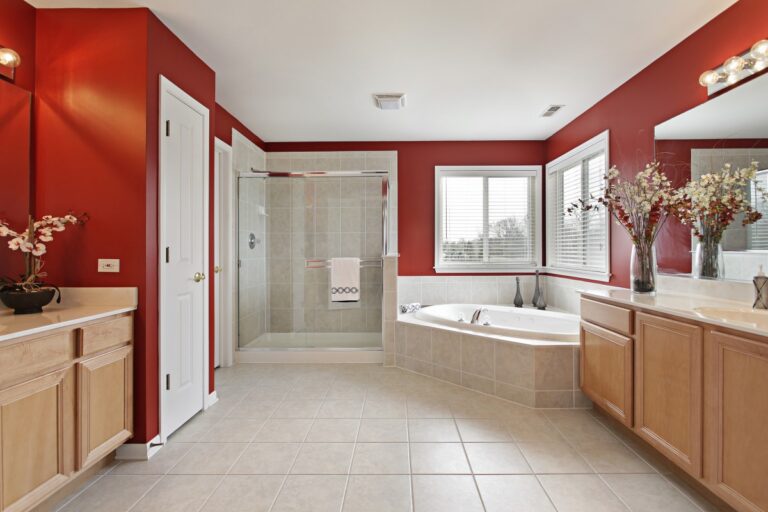
A Painter’s Guide to Painting Bathrooms
Adding color to the bathroom can make an average utility room stand out and create a much more comfortable setting. There is also some functionality that the right paint can add to your bathrooms, especially if they contain showers. Pro Finish Custom Painting will explain the best paints to use for your bathroom, and the best way to tackle the project.
Bathrooms are exclusive from every other room in the house in that they are mostly pointedly smaller than most rooms, not to mention, they have water flowing through them and can have water and/or water vapor hitting the walls. Both factors make painting the bathroom a bit more important when considering the process.
For starters, you need to make sure that the paint being used has at least a matte finish, and if possible, an eggshell finish. The sheen allows the paint to resist moisture. Flat paints are not good for humid or wet areas and can break down faster than paints with sheens. Matte paints also have the lowest sheen (flat has no sheen). Our painting contractors recommend an eggshell or satin finish for bathrooms and kitchens, but matte will also work. Some people even like to go as high as semi-gloss or gloss.
It’s best to use higher quality paint in the bathroom as well. It’s also important to make sure your paint will cover your walls in just two coats. If you’re using an eggshell or matte finish, it’s possible that lower quality paints will need a third coat. For the extra cost of using better paint, you can save yourself a lot of time. Don’t expect paint to cover in one coat, even if the paint gallon says it’s possible.
Working with paints that have a sheen is different than working with flat paints. You should paint one wall at a time. Do so by painting the perimeter of one wall, and then roll out the body of that wall before progressing on to another wall. If you paint all the perimeters of all walls first, and then roll out everything, you run the risk of having the perimeters dry first and “flashing” on the wall. The higher the temperature outside and the lower the humidity level, the more you will want to stick to this rule. If it’s cold and damp outside, you most likely won’t have to worry about this happening. But to be safe, check with the interior painters.
When beginning the project, make sure to remove everything you can from the bathroom. This includes the top of the toilet tank. Place everything outside of the bathroom. Most painting crews will take a photo of the way the room was set up to put everything back to the way it was. Professional Interior Painters will take the time to protect the floors, vanities, shower, and toilet with plastic or drop cloths.
Always remove the outlet plates, and if possible, wall sconces and light fixtures as well. They are typically connected with just a few screws and a hot/white wire. Unscrew and cap the hot wires (make sure you turn off electrical power to the room first)!
Since bathrooms are commonly much smaller than standard rooms, interior painters always carry the appropriate tools. Be sure to have a small paint roller available, as well as a paint pan to dip into and work with. Using larger rollers is not a beneficial idea if you only have a small amount of wall space. You can run the risk of putting too much paint on the walls and not having enough space to spread it out. Standard sized brushes are fine. Most professional painters will use a 2.5 inch with angled ends to brush work with.
Painting a bathroom can be a trying experience for the average DIYer. Give Pro Finish Custom Painting a call and let us take the anxiety out of painting your home for you!